Thrust Vectored Monocopter
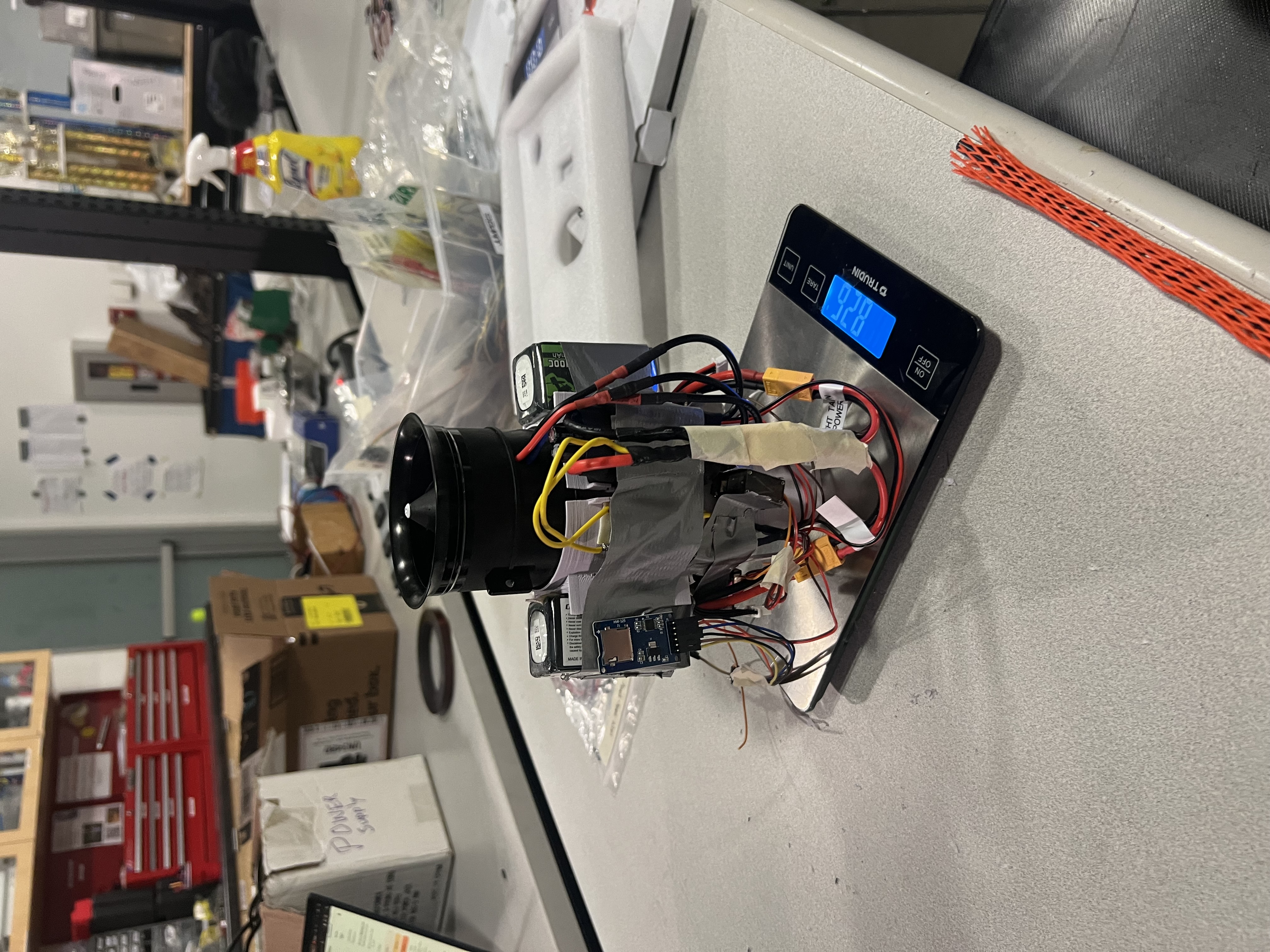
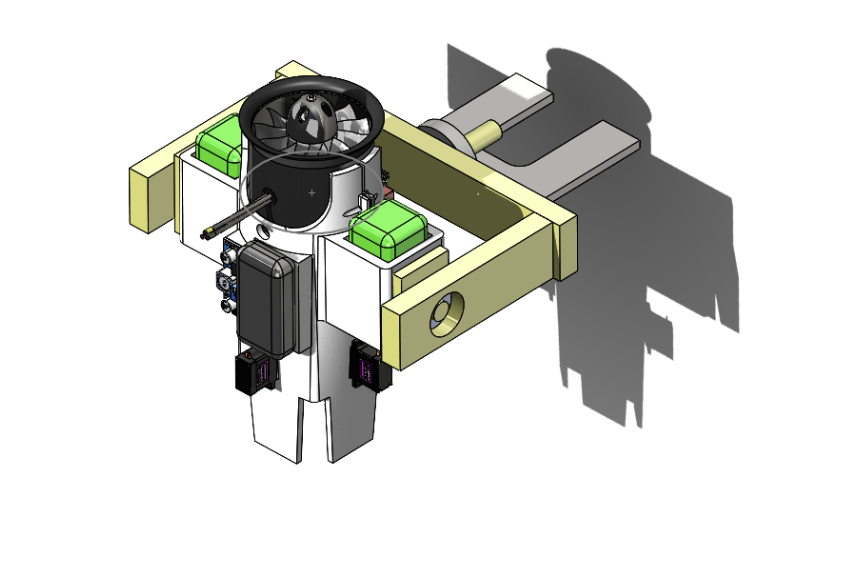
Led a grad robotics team to build a thrust-vectored monocopter — inspired by Falcon 9 landing control but without the expendables. Hardware was too unstable to fly, so the project became a full PD-controlled simulator.
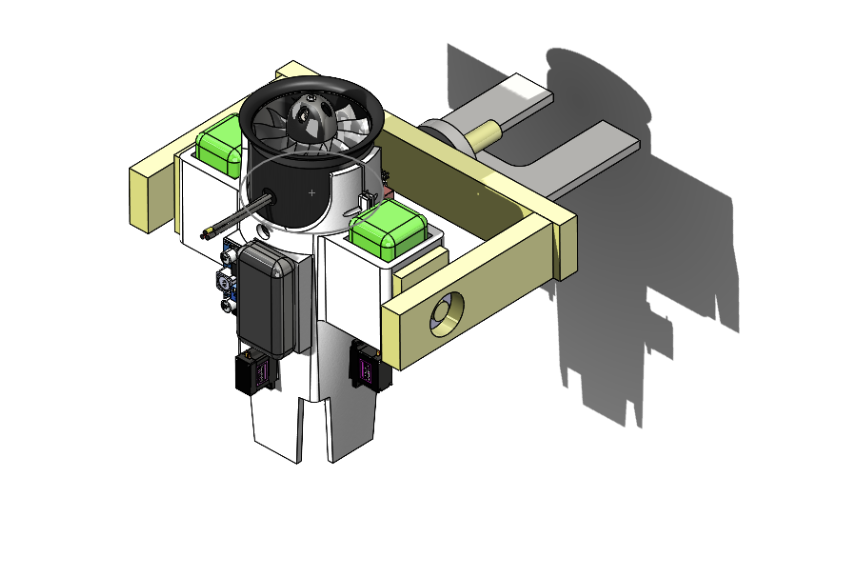
This was a graduate robotics team project I led. The goal was to learn the control theory behind propulsive rocket landings — think Falcon 9 — without the cost of real rocket hardware. A single-wing monocopter that spins about its vertical axis was chosen as a minimum-hardware testbed.
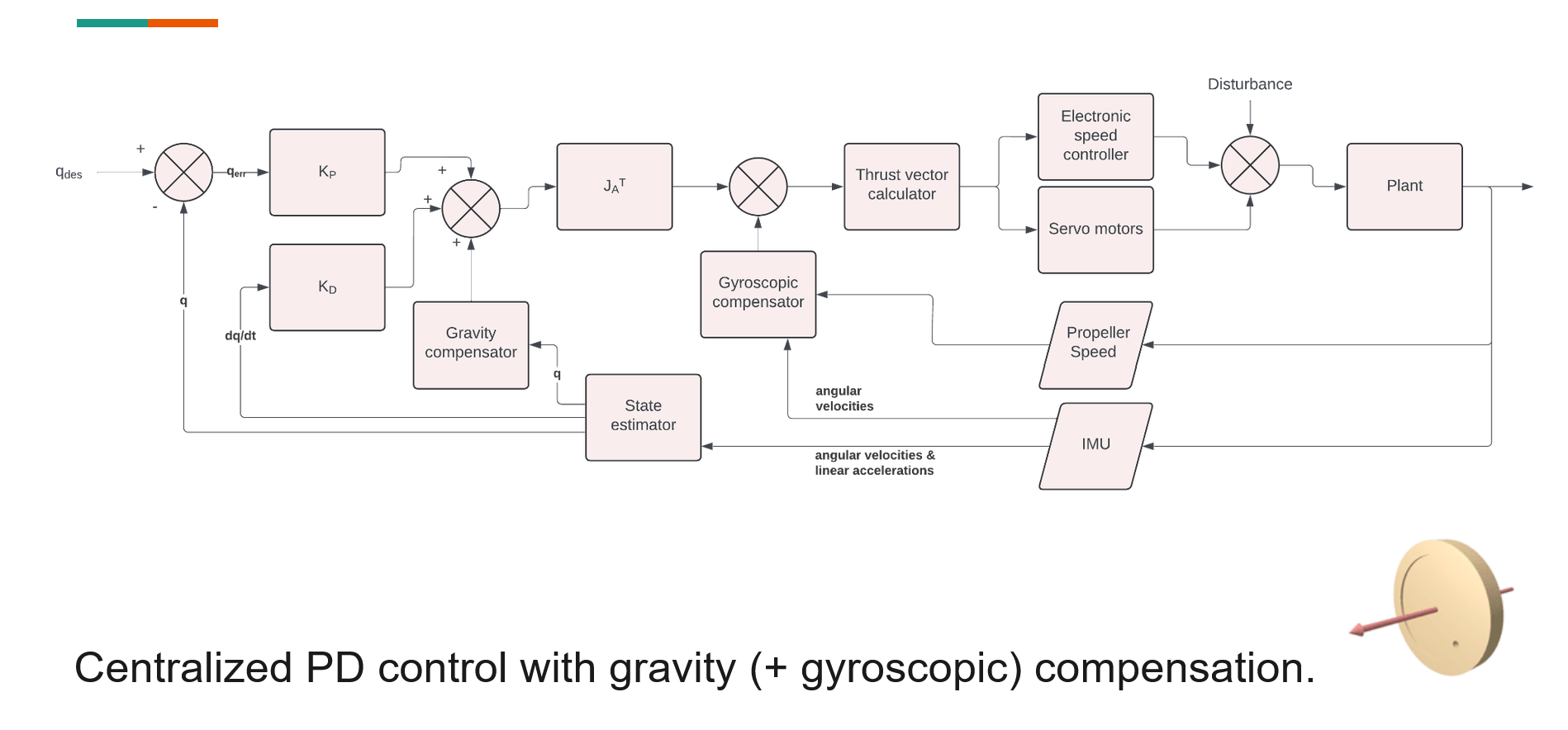
The control challenge: inputs must be phase-shifted relative to the blade's rotation angle to produce the intended real-world response. We designed a PD controller with Kalman-filtered IMU data for azimuth estimation and applied the appropriate phase compensation to the control law.
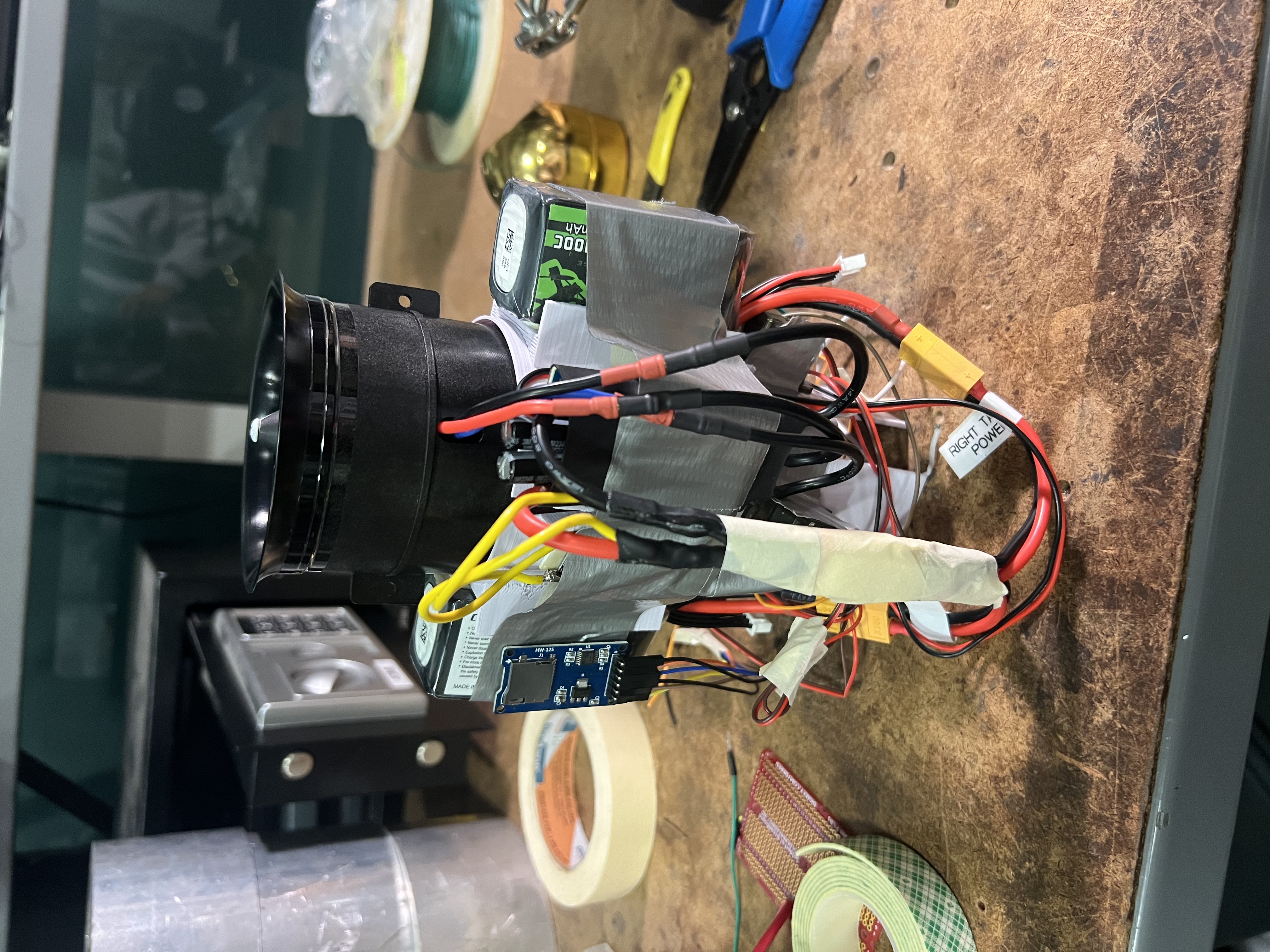
In practice the hardware was extremely difficult to stabilize — the vehicle would destroy itself before any useful data could be collected. The project shifted to a full simulation environment where the PD control law was implemented and validated properly.